Choosing a raised bed
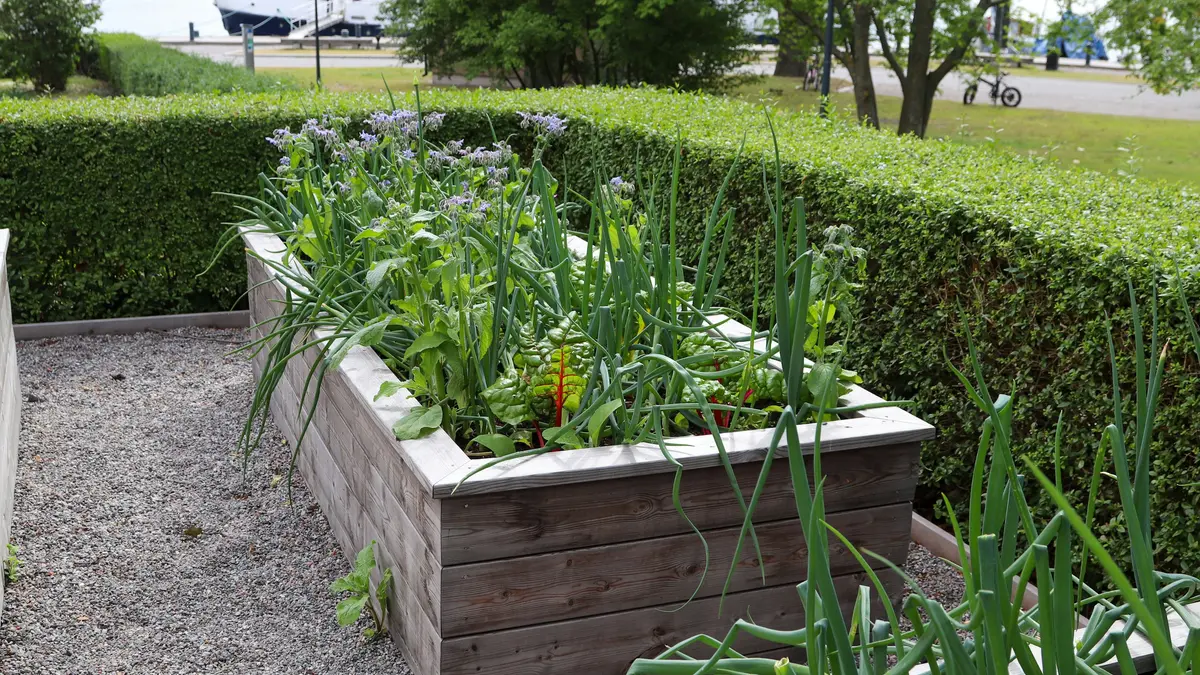
Short answer: Pick a material for how long you want it to last: pressure-treated softwood for value, larch or cedar for a longer life without added preservative, steel for the longest-lasting kit and recycled plastic for no upkeep. Keep it narrow enough to reach the middle without standing on the soil, 30cm deep for salads and 45cm or more for most other crops, in full sun. To order soil, multiply length by width by depth inside the walls and add about 15% for settling.
Updated
A raised bed gives you better soil where you want it, warms up sooner in spring and saves your back.
Do you need one?
Not always. Vegetables grow just as well in good ground as in a raised bed. A raised bed helps most on heavy soil that gets waterlogged and on a patio or hard standing. It also helps anyone who finds bending to ground level hard. A frame that holds soil at the same level as the ground around it isn't raised, so it won't drain any better.
Materials and how long they last
| Material | What to know | Typical life |
|---|---|---|
| Pressure-treated softwood (boards or sleepers) | The most popular choice and good value. Look for Use Class 4, the level of treatment British standards set for timber in contact with soil. Seal any cut or drilled ends with an end-grain preservative. | 5 to 15 years or more, depending on thickness and build |
| Larch or cedar | Naturally durable timbers, so no added preservative. Thicker boards resist bowing under the weight of soil. | 10 to 15 years or more |
| New hardwood sleepers, such as oak | Heavy and solid, with no added treatment. | 15 to 20 years or more |
| Galvanised or coated steel | Won't rot. Panels bolt together, and tiers stack for a taller bed. The sides can warm up in sun and dry the soil next to them. | 15 to 30 years or more |
| Recycled plastic | Very durable and needs no upkeep. Some are finished to look like timber. Only made in set sizes. | 10 to 25 years or more |
Treat these ranges as a guide. A bed that sits wet in shade, on poor drainage or with thin walls holding back deep soil wears out sooner than the same bed in a sunny, free-draining spot. Figures for treated timber vary the most: some put it at 5 to 10 years, others at 15 or more for full-size sleepers. Board thickness, the treatment level and how well the corners are built make most of that difference. Untreated timber such as scaffold boards or pallet collars has the shortest life.
Brick and stone last longest of all, but walls over 20cm need mortar and proper footings, so they're a building job rather than a kit. If honey fungus is a problem in your garden, the RHS suggests masonry or recycled plastic rather than timber, which can feed it.
Old railway sleepers and creosote
Don't use old railway sleepers treated with creosote for a raised bed. Under UK law, creosote-treated wood can't be used in gardens where there's a risk of frequent skin contact, or for containers for growing plants. Creosote is classed as a substance that may cause cancer. If you already have creosoted sleepers in the garden, the law doesn't make you take them out, but wear protective clothing if you handle them often.
New garden sleepers come in pressure-treated softwood or hardwood such as oak, cut to sleeper size. Check the listing says which, and for softwood, that it's treated to Use Class 4.
Is treated timber safe for vegetables?
Yes, for timber treated with today's preservatives. The RHS says modern treated wood and new sleepers don't contain the chemicals of old, so they're fine for food crops.
If you'd rather be extra careful, line the inside walls with heavy polythene, such as old compost bags, so soil doesn't sit against the wood. The RHS advises this for untreated timber you've painted with a preservative yourself, and calls it optional for bought treated timber, partly because it means more plastic in the garden. On a patio, a liner also stops soil washing out between the boards.
How wide?
Make it narrow enough to reach the middle without standing on the soil, though advice on the exact figure varies:
- The RHS says under 1.5 metres wide lets most people reach the centre.
- Thrive, the gardening-for-health charity, puts comfortable reach at about 50cm. That makes 1 metre the most if you can get to both sides, and 50cm if the bed backs onto a fence or wall.
If you're shorter, garden seated or have limited reach, go by Thrive's figure. Leave paths at least 45cm wide for a wheelbarrow and at least 1 metre for a wheelchair, more where you need to turn.
How high?
Thrive suggests these working heights:
| How you'll garden | Bed height |
|---|---|
| Standing, without bending | 90cm to 1m |
| Sitting on the edge | 69 to 76cm |
| From a wheelchair | About 62cm |
A straight-sided bed means leaning and twisting from a wheelchair. A raised planter on legs, or a bed with a recess for your knees, lets you face it square on. Wide, thick top boards or a capping rail give you somewhere to sit. Even 10cm of height makes a bed easier to reach than the ground.
How deep for what you grow?
- 30cm is enough for salad leaves, strawberries and dwarf bulbs.
- 45cm or more suits most other plants, and fruit bushes, shrubs and small trees need it.
Some soil calculators treat 30cm as standard for most vegetables and save 45cm for deep-rooted ones.
How much soil to order
length (m) × width (m) × depth (m) = cubic metres; × 1,000 = litres
- Measure inside the walls. A sleeper 10cm thick takes 20cm off each outside measurement.
- Fill to about 5cm below the rim, so take 5cm off the depth.
- Add about 15% for settling. New soil sinks over the first couple of weeks; top it up before planting.
For a bed 2.4 metres by 1.2 metres inside and 30cm deep, filled to 25cm: 2.4 × 1.2 × 0.25 = 0.72 cubic metres. Add 15%: 0.72 × 1.15 = about 0.83 cubic metres, or 830 litres.
The RHS mix for most beds is seven parts topsoil, three parts organic matter (garden compost, leafmould or well-rotted manure) and two parts horticultural sharp sand. For that bed, that's about 480 litres of topsoil, 210 litres of organic matter and 140 litres of sand. Bagged compost is sold by the litre, so check the size on the bag.
Advice on the fill varies. The RHS suggests mainly soil, because compost breaks down and slumps within a few seasons. Thrive suggests good-quality compost over a 5cm layer of clean stone or rubble for drainage. A topsoil-based mix holds its level better; whichever you use, expect to top it up as it settles.
For beds deeper than 50cm, the RHS suggests replacing the bottom layer with rubble or subsoil, and turf laid upside down. That drains well and cuts the amount of good soil you need.
Where to put it
- Sun. Most fruit, vegetables and cut flowers need full sun, so a south- or west-facing spot clear of overhanging trees is best. Run long beds north to south for even light.
- Shelter. Avoid the windiest corners.
- Level, firm ground. Whatever it sits on should be flat and firm. Check timber beds with a spirit level along each side and across the corners.
- Water nearby. Raised beds dry out faster than open ground, so a tap or water butt close by saves a lot of carrying.
On soil or on a patio?
On soil or grass, lift the turf and fork over the ground underneath, and water drains away naturally. On a patio or concrete, water has nowhere to go, so the bed needs drainage holes in the sides. The RHS suggests more sand in the mix on hard standing (three parts organic matter, four parts sand, seven parts topsoil) and refreshing the soil every so often, as you would a large pot.
Covers, netting and hoops
A raised bed is easy to cover, and hoop kits that fix to the frame hold a cover clear of the plants.
- Insect-proof mesh keeps off cabbage white butterflies, carrot fly and cabbage root fly without spraying. Finer mesh keeps out smaller insects, but costs more and can run warmer. Keep it off the leaves, as insects can lay eggs through it, and bury the edges under at least 5cm of soil. Stretching it tight over hoops can open up the holes. It can last five to ten years.
- Fleece gives a little frost protection, about 2°C from the heavier grades, but tears more easily than mesh.
- Bird netting must be pulled taut and fixed down at the edges, as birds and other wildlife can get caught in loose netting.
Take covers off strawberries and courgettes while they're in flower, so insects can pollinate them.
See also: how much gravel or bark? and getting it to your garden.
Please note: this guide is general advice to help you choose, not professional or legal advice. Every garden and every product is different, so always follow the maker's instructions, and get help from a builder for a brick or stone bed.
Sources for this guide
The pages we checked this guide's facts against, so you can read them for yourself. A link here isn't a recommendation.
- legislation.gov.uk: UK REACH, Annex XVII (entry 31, creosote)
- House of Commons Library: Creosote and telegraph poles
- RHS: How to make a raised bed; Raised beds; Insect-proof mesh
- Thrive: Gardening in raised beds; Wheelchair friendly garden design
- Wood Protection Association: Make sure it's 4; Understanding Use Class 4 (PDF); The use of creosote and creosote-treated wood (PDF)
- Harrod Horticultural: Metal raised beds
- The Raised Bed Company: How long do raised beds last?
- Estimatey: How much soil does my raised bed need?